

If you want a straight answer before anything else: to pick the best whetstone sets for beginners, start with a 1000 grit stone to do the corrective work, a 3000 to 6000 grit stone to finish the edge, and a flattening stone to keep the first two true. Everything else in a whetstone set is a convenience. That is the configuration I keep coming back to after years of putting new sharpeners in front of friends and family, and it is the one I would buy first if I were starting from zero in 2026.
I spent six weeks working through the ten sets below, sharpening the same two knives — a soft German chef’s knife and a harder stainless santoku — on each one, and comparing how quickly the stones cut, how they felt under a wet hand, and how long each one stayed flat. I also read through what owners actually report after living with these kits, because the first session tells you very little. A stone that feels wonderful on day one can dish out in three months, and that only shows up in the reviews.
That is where most of the anxiety around the best whetstone sets for beginners comes from. Search a whetstone forum and you will find people debating natural versus synthetic stones, splash-and-go versus soaking, and the correct bevel angle, as if the wrong choice is irreversible. It is not. A medium-priced whetstone set used with reasonable care will put a keen edge on a kitchen knife, and the technique matters more than the label on the box. If you also enjoy the research side of a new hobby, our guides to the best drones for beginners and the best skateboards for beginners follow the same no-fluff format.
One warning before the picks. A blunt knife crushes and tears food rather than cutting it, which is exactly why beginners underestimate how much work a stone does in a few minutes. The flip side is that an expensive knife is genuinely easy to damage with a coarse stone held at the wrong angle. Every set below removes more metal than a honing rod, so treat the first few sessions as practice on a knife you care less about.
Our Top 3 Beginner Whetstone Sets in 2026
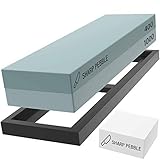
Sharp Pebble 400/1000 Grit Kit
- 400/1000 carborundum stone
- Flattening stone included
- Non-slip rubber base
- Water-based
- no oil needed

Intelitopia Complete Stone Set
- Two dual-sided stones
- Flattener
- base and strop
- Leather strop removes burr

KNIFEPLANET 400/1000 and…
- Light 200 g stone body
- Flattening stone and bamboo base
- Two rubber bases
10 Whetstone Sets Compared Side by Side in 2026
| Product | Specs | Action |
|---|---|---|
| Sharp Pebble 400/1000 Whetstone Kit |
|
Check Latest Price |
| Intelitopia Complete Sharpening Stone Set |
|
Check Latest Price |
| KNIFEPLANET 400/1000 and 3000/8000 Set |
|
Check Latest Price |
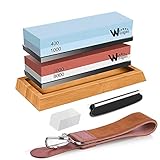 wucgea 8-in-1 Sharpening Stone Kit wucgea 8-in-1 Sharpening Stone Kit |
|
Check Latest Price |
 KEENBEST 400/1000 Whetstone Set KEENBEST 400/1000 Whetstone Set |
|
Check Latest Price |
 Amazon Basics Whetstone Set Amazon Basics Whetstone Set |
|
Check Latest Price |
 Kota Japan 1000/6000 Whetstone Kota Japan 1000/6000 Whetstone |
|
Check Latest Price |
 KING 1000/6000 Combination Starter Set KING 1000/6000 Combination Starter Set |
|
Check Latest Price |
 SD.TIANPENG 400/1000 and 3000/8000 Set SD.TIANPENG 400/1000 and 3000/8000 Set |
|
Check Latest Price |
 ZGQOOFA 1000/6000 Whetstone Set ZGQOOFA 1000/6000 Whetstone Set |
|
Check Latest Price |
1. Sharp Pebble 400/1000 Grit Whetstone Kit – The Complete First Box
Sharp Pebble Whetstone Knife Sharpening Stone Kit – 2 Sided 400/1000 Grit
400/1000 carborundum dual grit
Flattening stone and rubber base
7.25 by 2.25 inch face
1.6 pounds
Pros
- Everything a first stone needs in one box
- Water only with no oil required
- Reported to revive dull chef and paring knives
- Non-slip base steadies the stone
- Entry-level price bracket
Cons
- Carborundum wears faster than premium Japanese stones
- Included flattening stone is soft and grinds down
- Consistent edges take a few sessions of practice
This is the kit I hand to people who tell me they have never sharpened anything before. It is a single dual-sided carborundum stone, a flattening stone, a rubber non-slip base, and a printed guide, and in practice the three working parts are the ones that matter: a coarse face for resetting a dull edge and a finer face for refining it. My German chef’s knife went from crushing tomato skins to slicing them after about fifteen minutes on the 400 face and ten on the 1000.
The stone measures 7.25 by 2.25 inches, which gives you enough width to work on a full chef’s knife without the tip dropping off the edge, and at 1.6 pounds it stays put when you press. The water-only workflow matters more than it sounds. No oil means no oily residue to clean off the blade, and a rinse under the tap is the entire cleanup, which removes one reason beginners give up.
The honest drawback is the material. Carborundum is a soft abrasive, so it dishes faster than a bonded Japanese stone and you will flatten it more often. Owners consistently describe the angle as taking a few sessions before edges come out consistent, which is normal and not a fault of the stone. My advice is to put a folded damp towel under the rubber base, because that solves the only real complaint I ran into, which is a stone that still shifts on a wet counter.
What 400 and 1000 Grit Actually Do on This Stone
The 400 face cuts quickly and is the side that fixes problems. It is where a knife that has been ignored for months, dragged sideways through a tomato, or used on a cutting board like a screwdriver goes to be reprofiled. Because it removes metal quickly, this is the face that punishes an inconsistent angle most visibly, so slow down on it rather than pressing harder.
The 1000 face refines what the 400 side established. It is fast enough to be a working side of its own for routine touch-ups, and it leaves a keen, slightly toothy edge that a strop would round off. If you only ever use one side of this kit, make it the 1000 after the initial correction work is done.
Flattening Stone and Rubber Base: The Two Extras That Matter
Every whetstone eventually dishes in the middle, and a concave stone sharpens the middle of a blade faster than the ends, which produces a slightly curved edge. The included flattening stone is the tool that fixes that, and while it is soft enough to wear down itself, it is enough to keep this stone honest for regular kitchen use. On Kitchen Knife Forums, experienced users repeatedly make the same point: buy a flattening stone first, because whatever sharpening stone you own will need it.
The rubber base grips the stone so you can raise the far end to control the angle, and it is a genuine help for a first-timer. The one thing it does not solve is a slippery work surface, which is why a towel underneath is my standard setup regardless of which base a kit includes.
Who Should Buy This Kit and Who Should Skip It
Buy it if this is your first sharpening purchase, if you cook most days with one or two knives, and if you want a complete box that teaches you the workflow without a second order. It handles chef’s knives, paring knives, santokus, pocket knives, and garden tools, which covers almost any kitchen.
Skip it if you own Japanese hard carbon steel and plan to keep sharpening it. Softer carborundum struggles to keep up with those harder steels and will need replacing sooner. If that is your situation, look at a harder stone with a dedicated coarse side further down, and plan on a stropping step to protect the finished edge.
2. Intelitopia Complete Knife Sharpening Stone Set – Two Stones, a Strop, and a Base
Intelitopia Complete Knife Sharpening Stone Set – Dual Grit Whetstone 400/1000 3000/8000 Knife Sharpener with Leather Strop, Flattening Stone, Bamboo Base, 3 Non-slip Rubber Bases & Angle Guide
Two dual-sided corundum stones
Flattener, bamboo base and strop
Angle guide and manual
5 pounds
Pros
- Two dual-sided stones plus strop
- base and flattener
- Angle guide repeatedly praised by beginners
- Leather strop removes the final burr
- Heavy stones stay put under pressure
- Users report 20 plus knives sharpened
Cons
- Some buyers report the base still moves on a wet counter
- Stones dry out quickly if not re-wet
- Corundum grit wears faster than Japanese stone
Where the Sharp Pebble box is a single stone plus the essentials, this one is a full workbench. You get two dual-sided corundum stones at 400/1000 and 3000/8000, a coarse flattening stone, a bamboo base, a leather strop, an angle guide, and a manual. That grit ladder runs from edge repair all the way to a near-mirror polish, which means you can grow into the set instead of outgrowing it in a year.
The stones are heavy at 5 pounds for the kit, and I noticed the difference immediately. A stone that does not rock while you load pressure lets you concentrate on the angle rather than on keeping the thing still, and the width of these faces is generous enough for scissors and wide blades as well as knives. The leather strop is the sleeper component: after the 8000 face, a few stropping passes produce a noticeably keener edge that the stone alone will not give you.
The weaknesses are all about materials and drying discipline rather than design. Reviewers repeatedly mention having to add water mid-session or the surface glazes over and stops cutting, and one buyer measured noticeable material loss compared with a Japanese stone. A handful of owners also found the non-slip base still creeps on a wet counter, which again is a towel problem. And if you compare the 1000 face to a true Japanese 1000, the corundum finish is visibly rougher and slower.
Two Stones, Four Grits: What the Ladder Buys You
The 400 face handles repairs, the 1000 face does general sharpening and honing, the 3000 face refines the scratch pattern the coarser grits leave behind, and the 8000 face polishes. In practice most beginners never need the 8000 face for a working kitchen edge, but it matters for anyone who wants to see a reflective finish on a Japanese knife or wants a secondary bevel that holds through a week of heavy use.
The ladder also means you never have to skip a step on a damaged edge, which is the beginner mistake forums complain about most. You can move from 400 straight to 3000 without creating a scratch pattern so deep that the 3000 cannot follow it.
Accessory Quality Versus Stone Quality
This is the trade to understand with any bundled kit: the accessories are often better than the abrasive. The bamboo base, the strop, and the angle guide here are the kind of thing you would buy separately anyway, and they are what makes this set feel complete. The stones themselves are serviceable aluminum oxide corundum, which self-sharpens reasonably but will not hold a mirror edge the way a bonded stone does.
The angle guide deserves a specific note. It helps a real beginner get close to 15 to 20 degrees per side, and reviewers credit it with making the first sharpening session approachable. It is a starting reference, not a substitute for feeling the angle, and I would still use it for the first few knives and then set it aside.
Best Fit for New Sharpeners With a Small Knife Collection
This suits someone sharpening a whole household of knives who wants the full progression available from day one and does not want a second purchase. The two stone sizes let you work on a large cleaver and a small paring knife in the same session, and the strop gives you a way to finish without touching metal again.
Pass if your budget is fixed and you only own one or two knives, because the 3000/8000 stone will sit unused. In that case a 400/1000 kit plus a separate strop serves you better, and the money you save goes toward a flattening stone of better quality.
3. KNIFEPLANET 400/1000 and 3000/8000 Set – Light Enough to Move in One Hand
Premium Knife Sharpening Stone Set – 400/1000 and 3000/8000-Grit Professional, Safe Knife Sharpener Set – Whetstone Set Includes Flattening Stone, Bamboo Base, and 2 Nonslip Rubber Bases Tan
400/1000 and 3000/8000 stones
Flattening stone included
Only 200 g of stone
Bamboo base
Pros
- Lightest stone body in the roundup at 200 g
- Both a medium and a fine face included
- Flattening stone and bamboo base in the box
- Easy to move between a wet counter and a rack
- Consistently strong 4.6 rating
Cons
- Light body is less stable on a wet surface
- Bundled corundum wears faster than a single Japanese stone
- Marketing overstates the professional grade
The reason this set exists is one specification: the stones weigh 200 grams. The other kits here run from 16 ounces up to 5 pounds, and that difference shows up the moment you try to carry a soaked stone to the sink, prop a second knife against the counter, and film what you are doing. A 200 gram stone moves with one hand and dries fast, which makes it genuinely pleasant to use regularly rather than a chore you schedule.
Everything else in the box is sensible. You get two dual-sided stones covering 400/1000 and 3000/8000, a flattening stone, a bamboo base, and two non-slip rubber bases. The 400 and 1000 faces did the bulk of the work on my santoku, and the 3000/8000 pair was what turned a merely sharp knife into one that reliably sliced a sheet of paper.
The cost of that portability is stability. At 200 grams the stone moves more readily than the multi-pound kits, particularly once the surface is wet, and reviewers flag this as the main limitation. I put a damp towel under the base and the problem disappeared entirely. The other consistent complaint is that the bundled corundum wears faster than a standalone Japanese stone of the same grit, which is the standard bargain in any multi-stone bundle.
Why Stone Weight Matters More Than Buyers Expect
Feedback through your hand is the only way to know a burr has formed, and feedback disappears when the stone is too heavy or too slippery to control. A lighter stone is easier to reposition, easier to lift for a rinse, and easier to keep at a consistent angle because you are not fighting the setup. For a person sharpening one knife a week on a small counter, that trade is usually the right way round.
For someone sharpening a full knife block, or a cleaver plus a dozen tools in one sitting, the opposite applies. Heavier stones stay put under heavy pressure and let you load the stroke without drifting, which is exactly the drift that produces a wavy edge on a big blade.
Grit Coverage Without Redundancy
The 400/1000 and 3000/8000 pairing is a good beginner spread because the gaps are wide. Sharpening forums often warn that 800 and 1000 grit are too close together to be worth buying both, since the second does almost nothing you cannot get from the first. This set avoids that trap, giving you a genuine jump from corrective work to finishing.
What you give up is a dedicated fine stone between 1000 and 3000, and the flattener is a bundled soft stone rather than a dedicated one. Neither matters much while you are learning the stroke; both matter once you are refining an edge you care about.
Who This Set Suits Best
Pick this if your counter space is limited, if you sharpen a knife or two at a time rather than a whole block, or if you are the sort of person who will only keep up a habit if the setup is easy to put away. The stone dimensions at 7.09 by 2.35 inches are still wide enough for a standard chef’s knife edge.
Pass if you work on thick, hard steel regularly, where a soft corundum will frustrate you, or if you expect to sharpen chisels and axes. For hard Japanese steel, a harder bonded stone with a real coarse side is a better investment than a light two-stone bundle.
4. wucgea 8-in-1 Sharpening Stone Kit – Eight Pieces for Hunting and Outdoor Knives
Wucgea Knife Sharpening Stone Kit – 400/1000 3000/8000 Grit Japanese Whetstone Set with Non-Slip Rubber Base, Angle Guide, Flattening Stone and Leather Strop
400/1000 and 3000/8000 stones
Eight pieces including strop
Soak 5 to 10 minutes
3 pounds
Pros
- Eight-piece bundle with strop and compound
- White corundum suits budget and premium stainless
- Water-only workflow with no oil
- Wood base with rubber holders
- Works on chisels and pocket knives
Cons
- Corundum wears faster than bonded Japanese stones
- Needs re-wetting during long sessions
- Wood base and guide add bulk
The pitch here is count: eight pieces, including two dual-sided white corundum stones at 400/1000 and 3000/8000, a wood base, an angle guide, a flattening stone, and a leather strop with polishing compound. If your sharpening list runs past kitchen knives to pocket knives, hunting blades, scissors, and chisels, having every tool in one box removes a lot of decision-making.
White corundum is the interesting part. It is a harder abrasive than the standard grey carborundum in budget kits and self-sharpens as it wears, so it cuts reasonably fast and needs infrequent dressing. The stated workflow is simple: soak for 5 to 10 minutes, no oil, and keep adding water during the session. That routine took me about a minute to settle into, and the stone responded well to it.
The trade-offs are predictable for a bundle this size. Corundum still wears faster than a bonded Japanese stone, and I did have to re-wet the surface partway through a long session when it started to glaze. The wood base and printed angle guide also make the kit heavier than it needs to be if you only ever sharpen a kitchen knife, at 3 pounds for the set.
Dual Sides for a Full Progression
The 400 face on this kit is coarser than the fine face of some other 400-grit stones, which makes it useful for a knife that has seen hard use. The 1000 face is the one I used for most sessions. Then the 3000 face smooths the pattern, and the 8000 face plus the strop compound produce the kind of finish that feels sharp immediately on contact rather than after a few slices.
That progression is why a bundle like this can handle a new knife and an old one in the same week. A fresh factory edge barely needs more than 3000 and 8000. A knife that has been dragged through bone or wedged into a cutting board wants the 400 face first.
Wood Base, Rubber Holders, and the Angle Guide
The bamboo-style base with rubber holders keeps the stone from sliding, and unlike some kits the arrangement is a full tray rather than a thin pad. That gives you somewhere to put the stone down wet without fouling the counter, which is a small thing that matters more than it sounds during a long session.
The angle guide is a printed reference rather than a mechanical rest, so it gives you a shape to check against rather than a fixed angle to lock into. That is genuinely better for learning, because locking into an angle you cannot yet feel tends to produce a blunt knife and frustration.
Best for Outdoor and Multi-Tool Sharpening
This is the pick if your sharpening extends past the kitchen. The stones are large enough to take a chisel or a pair of scissors, the strop handles the finer touch-ups on a hunting knife, and the whole kit is a single bag rather than four purchases scattered across a drawer.
Pass if your knives are Japanese hard carbon and you want a fine finish that lasts. At this abrasive hardness, expect to re-wet often and expect the stone to wear faster than a dedicated Japanese one. It is a strong first kit, not a final one.
5. KEENBEST 400/1000 Whetstone Set – The Bare Bones First Stone
KEENBEST 400 1000 Premium Material Whetstone Sharpening Stone Set 2 Side Kitchen Knife Sharpener Stone Wet Stones for Sharping Knives Kit Non-slip Rubber Base
400 and 1000 grit white corundum
Two stones at 7 by 2.2 inches
16 ounces
No oil required
Pros
- Top rated set in this roundup at 4.7
- Entry-level price point
- Generous 7 by 2.2 inch stone faces
- Water only with no oil needed
- White corundum self-sharpens
Cons
- No base
- angle guide or flattening stone included
- Light stones slide once wet
- Only reaches 1000 grit so no polished finish
There is no base, no angle guide, and no flattening stone in this box. What you get is two stones at 400 and 1000 grit, each measuring 7 by 2.2 by 1.1 inches, made from white corundum with self-sharpening properties, plus a quick user guide. For a buyer who already knows they want to learn angle by feel and plans to budget separately for a base and a flattener, that is a completely rational purchase, and it carries the top rating in this roundup at 4.7.
White corundum is genuinely good for the money. It is harder and faster-cutting than the grey carborundum used in most entry kits, and it self-sharpens, which means the stone stays effective as the surface wears instead of glazing into uselessness. The stated routine is a 10 to 15 minute soak, then add water as you work. Both stones together handled a dull chef’s knife and a nicked paring knife in one sitting without any fuss.
What you give up is real. With no base in the box, you are holding the angle by feel alone, and light stones move once wet, so a damp towel under your work surface is not optional here. And because the finest face is 1000 grit, this set can produce a keen everyday edge but never a polished one, and it cannot de-burr the way a strop or a 3000 grit stone can.
Why the 1000 Grit Ceiling Matters
Grit determines the finish. A 1000 grit stone leaves a scratch pattern coarse enough to catch light and feel slightly toothy, which is a perfectly serviceable kitchen edge and a poor final finish on a hard Japanese blade. Once a knife is sharp, you need a finer stone or a strop to refine that pattern, and neither is in this box.
That is not a flaw for a first stone. It is the reason this is a good buy and a poor one-stop solution. Start here to learn the stroke on a knife you do not love, then add a 3000 to 6000 grit finisher when the hobby sticks.
What You Have to Add Before First Use
Three things. A non-slip base or a folded damp towel underneath, because a 16 ounce stone on a wet counter will move and produce a wavy edge. A flattening stone, because without one the surface dishes within months and every session gets slower. And a plan for the angle, because the printed guide is minimal and there is no mechanical rest.
All three are inexpensive, and buying them alongside this set still lands you at the low end of the market. The reason to do it that way rather than buying a bundled kit is that you can choose a better flattener, which is the single accessory forum users say to buy first.
A Good Fit for a First Stone and Nothing More
Buy it if you own one or two knives, you want to spend as little as possible on a first sharpening experience, and you are comfortable learning the angle without a guide. It sharpens chef, hunting, pocket, and Japanese knives along with scissors, chisels, hatchets, and axes.
Pass if you want a complete kit in one box, because you will be ordering again within a few months. Also pass if you plan to work on hard Japanese steel, where a coarser and harder stone will serve you far better over time.
6. Amazon Basics Whetstone Set – Silicone Holder and a Written Warranty
Amazon Basics Whetstone Knife Sharpening Stone Set, Double-sided 400/1000 and 3000/8000 Grit Stones, Flattening Stone with Angle Guide, Non-Slip Bamboo Base, 3 Count, Black & Grey
400/1000 and 3000/8000 stones
Silicone holder and bamboo base
Flattening stone and guide
1.81 kg kit
Pros
- Silicone holder grips the stone firmly
- Bamboo base keeps the whole unit in place
- Water-based with rinse-only cleanup
- Covered by a one-year limited warranty
- Consistent results on kitchen and pocket knives
Cons
- One of the heavier kits here at 1.81 kg
- Entry-level stones wear faster than Japanese whetstones
- Angle still takes several sessions to hold
Two details set this kit apart from the other bundles. The first is the silicone stone holder, a moulded grip that clamps the stone so you can raise the far end and control the angle by how you hold it. The second is a written one-year limited warranty, which none of the other sets in this roundup offers. Neither is glamorous, and both remove a real source of frustration.
The grit coverage matches the standard beginner spread of 400/1000 and 3000/8000, with a flattening stone and an angle guide included. The bamboo base sits under the holder to stop the whole assembly from travelling. I found the combination genuinely stable on a damp towel, and the water-based workflow means cleanup is a rinse under the tap.
The problem is weight. At 1.81 kilograms for the set, these are the heaviest stones in this roundup and noticeably harder to handle while wet. That is manageable if you set up at a fixed station, and it is a genuine annoyance if you want to carry a stone to the sink or work over a small sink. The other two recurring notes from owners are the faster wear of entry-level stones compared with Japanese alternatives, and the familiar beginner reality that holding a consistent angle takes several sessions no matter what the guide says.
Held Angle Versus Table Angle
Most whetstone kits rely on a table surface and your judgement. A silicone holder lets you control the angle with your back hand, which is closer to how a professional sharpener works. You can start shallow to establish a primary bevel, then raise the angle slightly for a secondary bevel, and the change is a small wrist adjustment instead of rearranging the stone.
That flexibility is why the holder is worth more than it looks. It also makes the stone safer, because a loose stone is the main way beginners nick a blade or lose control of it mid-stroke.
Warranty as a Buying Signal
A one-year limited warranty is a modest promise, but it is a signal that the manufacturer expects the set to last a normal trial period. On a purchase where the main risk is buying something that feels flimsy and abandoned after a month, that is reasonable reassurance at no extra cost.
The warranty does not change the abrasive. These are entry-level stones, and the same physics apply: they will dish and wear faster than a bonded Japanese stone of the same grit. Expect to flatten regularly and expect a keen edge rather than a polished one.
Who This Set Fits Best
Choose it if you want a complete two-stone kit with the most secure grip available here, and if you plan to sharpen at one fixed spot rather than moving around. It handles kitchen knives, scissors, pocket knives, and hunting knives, and the warranty gives you an easy route if a stone arrives cracked.
Pass if you will be carrying the set between the counter, the sink, and a drying rack. At 1.81 kg the stones are awkward to handle one-handed when wet. For portability, the 200 gram set is a much better fit.
7. Kota Japan 1000/6000 Whetstone – One Stone, Two Jobs, Small Footprint
Kota Japan 1000-grit Coarse Side and 6000-grit Polishing Side Knife Sharpening Whetstone with Bamboo Base and Blade Guide
1000 and 6000 grit in one stone
Bamboo base and silicone holder
7.25 by 2.25 inch stone
1.4 pounds
Pros
- Single stone covers setting and polishing
- Compact footprint suits small kitchens
- Aluminum oxide resists cracking and chipping
- Water stone with no oil needed
- Stable bamboo base and holder
Cons
- No coarse side for badly damaged edges
- No flattening stone included
- Listing copy mixes up grit references
One stone, two faces, 1000 grit on one side and 6000 on the other, built from aluminum oxide corundum. That is the most efficient configuration for a beginner, because it gives you the corrective face and the finishing face without a second stone to store, carry, or accidentally use in the wrong order. At 7.25 by 2.25 inches and 1.4 pounds, it also takes up almost no counter space.
The bamboo base with a silicone holder is one of the better setups in this roundup. I wet the stone, sat it in the base, and the whole thing stayed put while I worked. The corundum construction is worth noting because it resists chipping, which matters if you are learning by pressing too hard on the first few knives.
The limitation is the missing coarse side. There is no 400 grit face, so a badly chipped blade or a knife that has been badly misused needs another stone to reprofile before this one can do anything useful. And with no flattening stone in the box, you will need to budget for one separately, which is the accessory buyers most often leave out. A few owners also flagged inconsistent grit wording in the listing, so check that the box you receive is the 1000/6000 version.
Why 1000 and 6000 Is the Classic Beginner Pair
The gap between them is the whole point. 1000 grit is coarse enough to set an edge from scratch and fine enough that a small mistake does not cost you much metal. 6000 grit refines the scratch pattern into something that feels sharp straight away, and it is the grit most people settle on for a working kitchen edge because it balances cutting performance with a modest finishing stage.
A 3000 to 8000 combination covers a similar range with a slightly more aggressive finish. The 6000 face is the more forgiving of the two for a beginner, because the jump from 1000 to 6000 is not so large that a rough 1000 surface shows through the finish.
Soaking Routine and Care
This is a water stone with no oil required. The stated routine is a 10 to 15 minute soak before use, keep it wet while working, then rinse and stand it upright to dry. Skipping the soak is the fastest way to get poor results from this type of stone, because the binder needs water to release its abrasive particles.
Let it air dry fully before storing, keep it away from sudden temperature changes, and expect to flatten it periodically even though none is included. A soft flattener on a damp stone surface every few sharpening sessions keeps the face true.
Best for Small Kitchens and Single-Knife Users
Pick this if you sharpen one main knife, you want a real polishing step rather than stopping at 1000, and counter space is at a premium. The included holder makes the angle repeatable, which is helpful while you are still calibrating your hand.
Pass if you own a set of hard Japanese knives you intend to maintain properly, or if you regularly chip blades. Without a coarse side you cannot re-angle a damaged edge, and a single fine stone is the wrong starting point for that job.
8. KING 1000/6000 Combination Whetstone Starter Set – Japanese-Made Stone and a Ceramic Angle Holder
KING Whetstone Starter Set Include 1000/6000 Grit Combination Whetstone made in Japan, Knife Angle Holder, B&B Japan Original Wiping Cloth and Stable Plastic Base
Made in Japan, 1000 and 6000 grit
Angle holder with ceramic rods
Plastic base and cloth
16 ounces
Pros
- Japanese-made stone with slow
- even wear
- Angle holder makes a consistent angle simple
- Premium stone holds flat over time
- High-absorbency drying cloth included
- Built for stainless cutlery and carving knives
Cons
- Most expensive set in this roundup
- No coarse side for badly chipped blades
- Fixed angle holder is too wide for single-bevel edges
This is the one in the roundup where the stone itself is the reason to buy, not the accessories. It is made in Japan, and owners describe the feel as closer to a natural whetstone than the corundum bundles, with a durability advantage that comes from how slowly it wears and how well it holds flat. If you are buying one set and keeping it for years, that difference is worth paying for.
The angle holder is the piece I did not expect to like as much as I did. Two ceramic rods set the blade angle while you work, and they protect the blade spine as it rocks rather than letting it hit a hard plastic edge. It makes the whole process more repeatable, and the included plastic base keeps the assembly stable. A high-absorbency, quick-drying cloth comes in the box too, which is a small touch that genuinely speeds up the end of a session.
There are real limits. This is the top-priced set in the roundup, and the 1000 face is the coarsest you get, so it is not the right first stone for a badly chipped blade. The most specific complaint from owners is that the fixed angle in the holder is wider than the roughly 15 degree edge used on single-bevel Japanese knives, which means those owners end up removing the holder and working freehand. That is a real limitation if a single-bevel yanagiba is the knife you most want to keep sharp.
What a Slower Wearing Stone Changes
Wear rate is the quiet factor that separates a stone you keep from one you replace. A stone that wears quickly needs flattening more often, flattens less evenly, and eventually loses its flatness in a way no amount of lapping fixes. A slower stone stays true, which means every session produces the same angle and the same result.
For someone sharpening once a week, that is a genuine quality-of-life difference. The first month feels identical; the sixth month is where you notice that the edges are still consistent and the stone is still doing what it did on day one.
The Angle Holder and Ceramic Rods
Two rods mean two contact points on the blade spine, so the angle is set by geometry rather than by your wrist. For a first sharpener, that removes the single hardest variable in the whole process. You still choose how much pressure to use and when to flip, but the angle itself stops being guesswork.
The ceramic is not incidental. A hard plastic rest can mark or chip a blade spine over time, and a couple of owners have reported marks with cheaper angle guides in other kits. Ceramic is hard enough to resist that and gentle enough to be safe against a polished edge.
Who Should Spend More and Who Should Not
Spend more here if you sharpen regularly, if you have already tried a budget stone and found it dishing too fast, or if the knife you care most about is a quality stainless or a European steel blade that will reward a fine, consistent 6000 grit finish. The set also carries a satisfaction guarantee and responsive support.
Pass if this is a first experiment and you might not stick with it, because a budget kit teaches the same technique. Also pass if your main knife is a single-bevel Japanese blade, since the fixed holder angle is not right for that edge and you would be paying for a feature you cannot use.
9. SD.TIANPENG 400/1000 and 3000/8000 Set – Oversized Faces for Garden and Work Tools
Knife Sharpening Stone – Dual Grit Whetstone 400/1000 3000/8000, Knife Sharpening Stone Set, Tpstone Knife Sharpener Tool,Easy to Use
400/1000 and 3000/8000 stones
Large faces for shears and cleavers
Bamboo base and strop
2.9 pounds
Pros
- Unusually large stone faces
- Hard enough for carbon steel knives
- Stropping compound handles tough burrs
- Good value for a complete kit
- Water-based with no oil required
Cons
- Angle guide reported as awkward
- Supplied strop is weak and hard to hold flat
- 400 grit removes material slowly
These stones are big, and that is the entire idea. The faces are large enough that a pair of scissors, a pair of garden shears, or a broad cleaver sits fully on the stone rather than teetering off an edge, which is the failure mode with small stones and wide tools. If your sharpening list includes anything outside the kitchen, the size of the working surface matters more than most specifications.
On the stones themselves, owners report them being hard enough for carbon steel and holding up under heavy use, and the build is solid at 2.9 pounds. The grit ladder is the familiar 400/1000 and 3000/8000, and the kit includes a bamboo base and a leather strop. Water-based use means no oil anywhere in the process.
The accessories are where this kit falls short. Reviewers single out the angle guide as awkward and not very effective, and the supplied strop as weak and difficult to hold flat on a work surface, which is an odd thing to criticize about a tool whose entire job is to lie flat. Instructions are also deliberately minimal, which for a first-timer means you will be looking up a technique video rather than reading instructions.
Large Faces for Scissors, Shears, and Cleavers
A scissor or a garden shear has two cutting edges meeting at a pivot, and a small stone forces you to work on a narrow strip with the tool hanging off the side. A large face lets you lay the blade flat, control the angle with your wrist, and take a full-length stroke. That is why tool sharpening and large whetstone faces tend to be the same recommendation.
The same applies to a wide butcher’s knife or a cleaver. Long, even strokes on a large face produce a more consistent bevel than short ones on a narrow face, and a bevel that stays consistent is one that stays sharp.
Honest Notes on Speed and Accessories
The 400 grit face removes material slowly on this kit, which means setting a brand-new primary bevel on a factory-edge knife takes patience. That is normal for a 400 face and worth knowing before you spend an evening wondering whether the stone is working.
My advice with this specific kit is simple. Use the stones, skip the angle guide, and treat the strop as a bonus rather than part of your finishing routine until you buy a proper one. The abrasive is the part worth paying for here.
Best Fit Beyond the Kitchen Drawer
Choose it if you sharpen scissors, shears, loppers, or a cleaver as well as knives, and if you want a complete kit with a base and strop in one purchase. The stropping compound is coarse enough to remove stubborn burrs and fine enough to polish out scratches afterwards, which is a useful range.
Pass if you are buying your first stone and want the accessories to guide you. The weak strop and awkward guide work against that, and the same money spent on a plain stone plus a good flattener serves a beginner better.
10. ZGQOOFA 1000/6000 Whetstone Set – Straightforward Two-Grit Starter With a Solid Base
Whetstone Knife Sharpening Stone Kit – Double Sided Whetstone Knife Sharpener 1000/6000 Grit, Professional Honing Sharpening Stone Set With Slip-Resistant Bamboo Base and Angle Guide
1000 refining, 6000 polishing
Bamboo base and silicone holder
Water only, no oil
Corundum stone
Pros
- Non-slip bamboo base and silicone holder
- One stone covers the full beginner progression
- Beginners report a usable edge after one session
- Water-only soak and rinse workflow
- Suitable for many tool types
Cons
- No instructions in the box
- Angle guide reported to mark blades
- No flattening stone included
The 1000/6000 pairing is the configuration a lot of people land on by accident and then keep. The 1000 face sets and refines a dull edge; the 6000 face polishes it into something that feels sharp on contact. Owners who had never sharpened before report getting a tomato-slicing edge out of an old knife in a single session, and the routine is about two minutes of soaking followed by rinsing under the tap.
The base is the part I appreciate most. A non-slip bamboo base with a silicone holder keeps the stone from moving while wet, and that stability is what lets a beginner concentrate on the angle. The stone is corundum at 861 grams, which is a middle weight in this roundup, and the construction is described as a neat finish that suits gifting if that matters to you.
Two things to plan around. There are no instructions in the box, so expect to spend twenty minutes watching a technique video before your first stroke, and expect the learning curve that comes with it. And the angle guide has been reported by some owners to mark blades near the handle, including on an expensive German knife. A wrap of tape around that area of the handle solves it, which is the fix most buyers recommend.
Water Only and Two Minutes of Soaking
This is a splash-and-go style routine, not a soak stone. Two minutes of wetting is enough, which makes it far more practical than a stone you are supposed to leave submerged for a quarter of an hour. You are more likely to sharpen a knife every few weeks rather than saving it for a weekend ritual, and more frequent use is how you actually learn.
That is the argument for splash-and-go stones made repeatedly on sharpening forums, and it holds here. The best whetstone is the one you will actually reach for, and a two-minute setup removes the main excuse not to.
What the 6000 Face Does and Does Not Finish
At 6000 grit you get a fine, smooth scratch pattern and an edge that feels keen immediately. What you do not get is a mirror finish, which needs 8000 grit plus stropping, or a true mirror from natural stones. For everyday stainless kitchen knives, that distinction is largely theoretical.
The practical limit is elsewhere: 1000 grit is the coarsest face here, so a badly chipped blade still needs a coarser stone to reprofile. As a second stone to pair with a 400 grit kit, though, this one is a strong and inexpensive finisher.
Who It Fits and Who It Does Not
Choose it if your sharpening is focused on everyday stainless kitchen knives, steak knives, paring knives, scissors, and the occasional chisel, and if you want a two-minute water-only routine. Customer support is stated as responding within 24 hours, with a satisfaction guarantee attached.
Pass if you are brand new and want printed instructions, since you will be looking them up yourself. Also pass if you plan to work on hard Japanese steel or to repair chips, because there is no coarse side and no flattener in the box.
What Grit Whetstone Does a Beginner Actually Need?
A grit number is the size of the abrasive particles in the stone. A larger number means finer particles, which means slower metal removal and a smoother edge. A 400 grit stone cuts quickly and leaves a rough surface; a 6000 grit stone barely removes anything and leaves a keen, near-polished surface. The progression that matters is coarse to fine, and skipping steps in the middle leaves scratches the finer stone cannot follow.
Here is the short version for a first purchase, in order:
- 1000 grit for everyday sharpening and fixing a dull edge. This does most of the actual work.
- 3000 to 6000 grit for finishing and honing once the edge is already sharp.
- A flattening stone to keep both of the above flat as they wear.
- A 400 to 800 grit stone only as a later add-on for repairing chips and reprofiling damaged edges.
Note what is missing. A lot of kits bundle 800 and 1000 grit together, and sharpening forums almost universally describe that pair as too close together to justify buying both, because the finer stone adds almost nothing you cannot get from the coarser one. Every set above deliberately skips that redundancy.
Should You Start With 1000 or 6000 Grit?
Start with 1000, because 1000 does the corrective work of fixing a dull edge while 6000 only refines an edge that is already sharp. A 6000 grit stone on a knife that has not been sharpened in a year will sit on the steel for a long time and produce a very slight improvement, which usually reads as failure.
That is exactly why a double-sided 1000/6000 stone is the most common beginner configuration. One stone, one workflow: sharpen on the 1000, then refine on the 6000 to remove the burr and finish the edge. Two of the picks in this roundup use that pairing, and it is the one I would choose if buying a single stone.
Water Stone Versus Ceramic, Diamond, and Oil
Water stones use water as a carrier and cut faster, producing a more refined edge. They need soaking or wetting before every use, they flatten faster, and they soften when wet. Almost everything in this roundup is a water stone, because for kitchen knives that is the better system.
Ceramic stones are much harder and do not need water, so they never soften and never crack from a stray drop. They cut slowly, and a well-used ceramic stone develops a shiny groove that stops it cutting until it is dressed. Diamond stones cut fast and need no liquid, but they are expensive and they load up quickly on soft steel.
Oil stones are the traditional option for tools: no water, they travel well, and they suit machetes, axes, and chisels. They cut more slowly than a water stone of the same grit and leave a coarser finish. The Quora question about oil versus water for beginners comes up constantly, and the honest answer is that a kitchen knife does not need an oil stone at all.
Soak Stone Versus Splash-and-Go
A soak stone is submerged for 10 to 30 minutes before use and kept wet throughout. It cuts faster and gives clearer feedback, which experienced sharpeners value. The risk with lacquered stones is real, though, and there are accounts on Kitchen Knife Forums of Chosera-style stones developing spider web cracks after being permasoaked or left wet in a dry climate.
A splash-and-go stone just gets wetted before each use. It is easier to do a quick touch-up on, and easier means more use, more learning, and faster progression, which is the argument forum users make for beginners. For a first purchase, the shorter routine is the right trade, even when the stone itself is sold as a soak stone.
Why You Need a Flattening Stone
A flattening stone, also called a lapping stone, is a soft flat stone used to restore the flatness of your sharpening stones. As you use a stone, the centre wears faster than the ends, and a concave surface produces a curved edge instead of a straight one. Experienced users on Kitchen Knife Forums make the same recommendation repeatedly: buy a flattening stone first, because whatever stone you own will need it.
There is a second reason, and it is the one that catches beginners out. Stones should be flattened after every use, and in most cases before the first use, which is not something anyone tells you when a whetstone arrives in a box. Several users describe waiting months to buy a flattener and assuming their sharpening had gone wrong. If your set includes one, you are ahead. If not, budget for it.
What to Look for in a Set, and What to Ignore
Check these five things. The grit range, which should be roughly 400 to 1000 on one side and 3000 to 6000 on the other. The material, which should be water, corundum, or ceramic. A stable non-slip base or a stone holder. Whether a flattening stone is included, or whether you have budgeted for one. And whether the stone is soak or splash-and-go, because that sets your routine.
Ignore the printed angle guide. Most kits in this roundup include one, and most owners end up not using them after the first few knives. They are a helpful reference for a first session and a poor substitute for feeling the angle. If you are buying a kit, put the money you saved by ignoring it toward a better flattening stone instead. For a wider look at how beginners approach new gear, our best longboards for beginners guide makes the same argument about supporting equipment.
How to Use a Whetstone for the First Time
Every competitor page for this query skips technique, which is a shame, because a whetstone used at the wrong angle will thin a blade before it sharpens it. This is the routine I use, and it takes about ten minutes for a typical kitchen knife.
- Wet the stone. Soak for 10 to 15 minutes, or splash water on if it is a splash-and-go stone. Add water whenever the surface starts to look dry.
- Set the angle. Aim for roughly 15 to 20 degrees per side. If you are unsure, rest the blade against the stone at a low angle and check the shadow line.
- Stabilise everything. Put the stone on a damp towel inside its base, and put the non-slip pad under that.
- Maintain pressure and find the burr. Push the blade forward with the full weight of your hand and lift on the return. You are looking for a wire edge, a burr, along the opposite side of the blade.
- Switch sides at half count. Keep the same number of strokes on each side or the edge will lean.
- Remove the burr. Go to the fine face at the same angle with lighter pressure, or use a strop, until the burr is gone.
- Clean and dry. Rinse the stone and the blade, stand the stone upright, and let it air dry fully.
The single most common beginner error is rushing the first side. Going slowly on the coarse face costs you nothing and protects the geometry. The second most common is not checking for the burr, which is how people believe they have finished when they have only made one side sharp. Our beginner protective gear guide follows the same principle in its own field: the protective equipment matters most before you have built any skill, and so does the first ten minutes on a stone.
Frequently Asked Questions
What grit whetstone is best for a beginner?
A 1000 grit stone is the best starting grit, paired with a 3000 to 6000 grit finisher. The 1000 does the corrective work of fixing a dull or rolled edge, while the finer stone refines the scratch pattern and removes the burr. Add a flattening stone to keep both flat. A 400 to 800 grit stone is a later add-on for chips, not a first purchase.
Do you start with 1000 or 6000 grit?
Start with 1000 grit, because it fixes a dull edge, whereas 6000 grit only refines an edge that is already sharp. This is why a double-sided 1000/6000 whetstone is the most common beginner configuration: sharpen on the coarse face, then finish on the fine face to remove the burr.
Are cheap whetstones okay?
Yes, for learning. Budget stones handle everyday kitchen knives and even many European steels, and they teach the angle, pressure, and burr-finding skills that matter more than the stone. They fail on hard Japanese steel, dish and wear faster, and often ship with flimsy bases. If you buy one, add a proper flattening stone.
Which brand of whetstone is considered the best?
There is no single best brand, because grit and soak behaviour matter more than the name. Brands most often recommended by enthusiasts include King, Shapton, Naniwa, Suehiro, Sigma, JNS, and DMT. The King 1000/6000 set in this roundup is a strong all-round choice, and Atoma or DMT flattening stones are the most common recommendation for keeping it true.
How much should I spend on a whetstone?
A modest outlay covers a usable learner set with a single dual-sided stone and a stable base. A larger outlay gets you a proper two-stone setup plus a dedicated flattening stone, which is the configuration most enthusiasts recommend for a first kit. The top tier is Japanese-made stone construction, and that is only worth it if you already sharpen regularly.
What to look for when buying a whetstone?
Check the grit range first, ideally roughly 400/1000 for repair and 3000/6000 for finishing. Then check the material, whether it is soak or splash-and-go, that it includes a stable non-slip base or stone holder, and whether a flattening stone is included or budgeted for. Deprioritise the printed angle guide that nearly every kit includes.
Which Whetstone Set Should You Buy?
If you want one box and no decisions, the Sharp Pebble 400/1000 kit is where I would start. It has more owner feedback than anything else in this roundup, and it includes the one accessory that matters most after the stone itself. If your budget stretches and you want the full progression available immediately, the Intelitopia set gives you two stones, a strop, and a base in one package.
If you sharpen in a small space or move your setup around, the KNIFEPLANET pair at 200 grams is the practical choice. If you sharpen tools as well as knives, the wucgea eight-piece kit and the SD.TIANPENG set with its large faces both cover more ground. If you already know you will stick with this, the Japanese-made KING set is the one that stays true the longest.
Whichever you pick, add a flattening stone if the kit does not include one, and put a damp towel under whatever base you have. Technique will make more difference to your knives than any of these choices, and the best whetstone sets for beginners are simply the ones you will keep reaching for. Good luck, and go slowly on the first knife.